Matias El ruben

Matias El ruben

Simple Quantum Key Distribution with qubit-based synchronization and a self-compensating polarization encoder
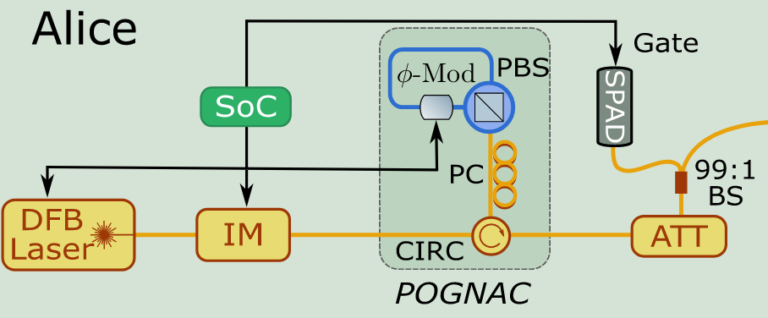
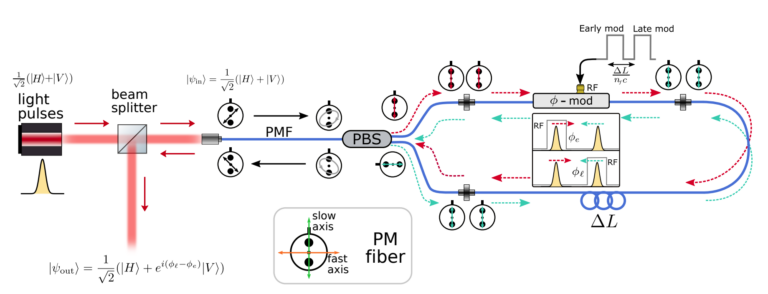
Quantum Key Distribution (QKD) relies on quantum communication to allow distant parties to share a secure cryptographic key. Widespread adoption of QKD in current telecommunication networks will require the development of simple, low cost and stable systems. However, current QKD implementations usually include additional hardware that perform auxiliary tasks such as temporal synchronization and polarization basis tracking. Here we present a polarization-based QKD system operating at 1550 nm that performs synchronization and polarization compensation by exploiting only the hardware already needed for the quantum communication task. Polarization encoding is performed by a self-compensating Sagnac loop modulator which exhibits high temporal stability and the lowest intrinsic quantum bit error rate reported so far.The QKD system was tested over a fiber-optic link, demonstrating tolerance up to about 40 dB of channel losses. Thanks to its reduced hardware requirements and the quality of the source, this work represents an important step towards technologically mature QKD systems.

Stable, low-error and calibration-free polarization encoder for free-space quantum communication

iPognac

Polarization-encoded free-space Quantum Communication requires a quantum state source featuring fast polarization modulation, long-term stability and a low intrinsic error rate. Here we present a source based on a Sagnac interferometer and composed of polarization maintaining fibers, a fiber polarization beam splitter and an electro-optic phase modulator. The system generates predetermined polarization states with a fixed reference frame in free-space that does not require calibration neither at the transmitter nor at the receiver. In this way we achieve long-term stability and low error rates. A proof-of-concept experiment is also reported, demonstrating a Quantum Bit Error Rate lower than 0.2% for several hours without any active recalibration of the devices.

OPENQKD su IlSole24Ore

IlSole24Ore, nella sua edizione cartacea del 9 dicembre 2019, ha parlato del nostro Dipartimento di Ingegneria dell’Informazione. QuantumFuture è presente grazie alla partecipazione al progetto europeo OPENQKD. OPENQKD (www.openqkd.eu) è un progetto europeo triennale iniziato a settembre 2019 con un…

New All-fiber autocompensating source for polarization QKD

Quantum key distribution (QKD) allows distant parties to exchange cryptographic keys with unconditional security by encoding information on the degrees of freedom of photons. Polarization encoding has been extensively used for QKD along free-space, optical fiber, and satellite links. However, the polarization encoders used in such implementations are unstable, expensive, and complex and can even exhibit side channels that undermine the security of the protocol. In our recently published manuscript (Agnesi et al. Opt. Lett 44(10) 2398 (2019); https://doi.org/10.1364/OL.44.002398) we propose and test a new polarization encoder: the POGNAC (for POlarization SaGNAC). The POGNAC combines a simple design and high stability reaching an low intrinsic quantum bit error rate. Since realization is possible from the 800 to the 1550 nm band using commercial off-the-shelf devices, our polarization modulator is a promising solution for free-space, fiber, and satellite-based QKD.

Source-device-independent heterodyne-based quantum random number generator at 17 Gbps

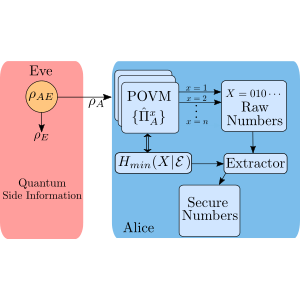
Random numbers are commonly used in many different fields, ranging from simulations in fundamental science to security applications. In some critical cases, as Bell's tests and cryptography, the random numbers are required to be both secure (i.e. known only by the legitimate user) and to be provided at an ultra-fast rate (i.e. larger than Gbit/s). However, practical generators are usually considered trusted, but their security can be compromised in case of imperfections or malicious external actions. In this work we introduce an efficient protocol which guarantees security and speed in the generation. We propose a novel source-device-independent protocol based on generic Positive Operator Valued Measurements and then we specialize the result to heterodyne measurements. The security of the generated numbers is proven without any assumption on the source, which can be even fully controlled by an adversary. Furthermore, we experimentally implemented the protocol by exploiting heterodyne measurements, reaching an unprecedented secure generation rate of 17.42 Gbit/s, without the need to take into account finite-size effects. Our device combines simplicity, ultrafast-rates and high security with low cost components, paving the way to new practical solutions for random number generation.

Towards Quantum Communication from Global Navigation Satellite System

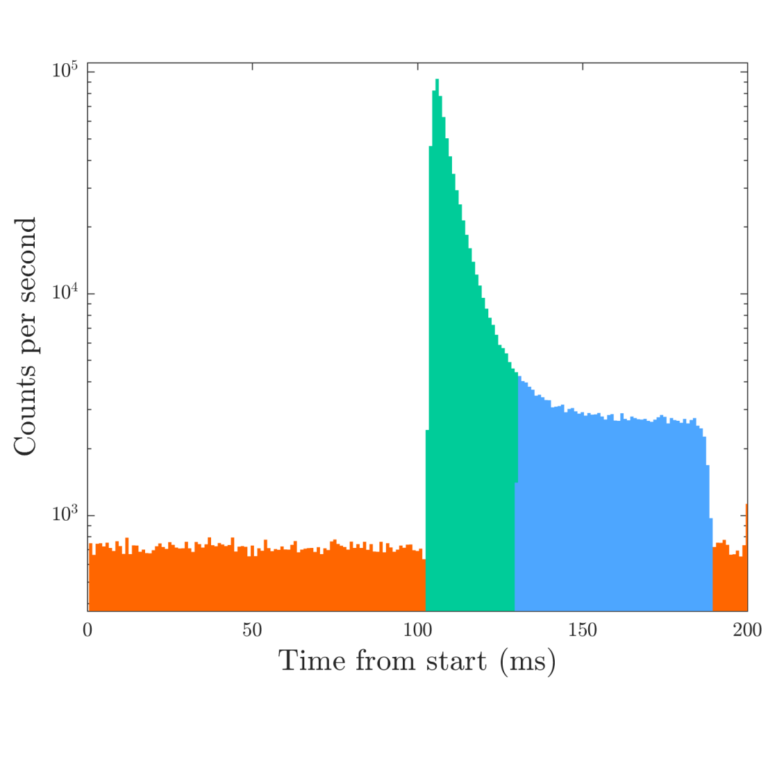
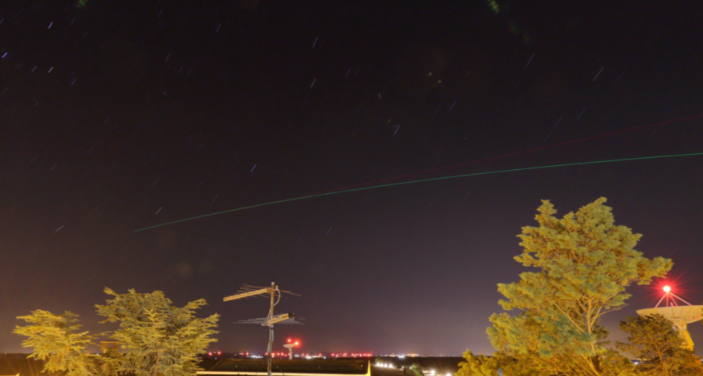
Satellite-based quantum communication is an invaluable resource for the realization of a quantum network at the global scale. In this regard, the use of satellites well beyond the low Earth orbits gives the advantage of long communication time with a ground station. However, high-orbit satellites pose a great technological challenge due to the high diffraction losses of the optical channel, and the experimental investigation of such quantum channels is still lacking. Here, we report on the first experimental exchange of single photons from Global Navigation Satellite System at a slant distance of 20000 kilometers, by exploiting the retroreflector array mounted on GLONASS satellites. We also observed the predicted temporal spread of the reflected pulses due to the geometrical shape of array. Finally, we estimated the requirements needed for an active source on a satellite, aiming towards quantum communication from GNSS with state-of-the-art technology.

Direct reconstruction of the quantum density matrix by strong measurements

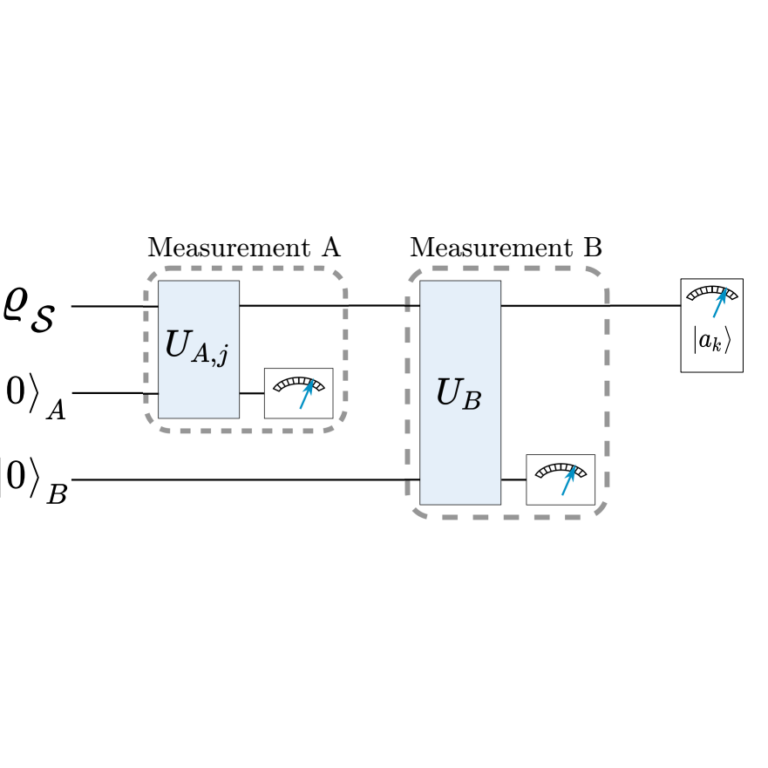
New techniques based on weak measurements have recently been introduced to the field of quantum state reconstruction. Some of them allow to directly measure each matrix element of an unknown density operator and need only d+1 different couplings between the system and the measuring device, compared to d2 in the case of standard QST for the reconstruction of an arbitrary mixed state. However, due to the weakness of these couplings, these protocols are approximated and prone to large statistical errors. We propose a method which is similar to the weak measurement protocols but works regardless of the coupling strength: our protocol is not approximated and thus improves the accuracy and precision of the results with respect to weak measurement schemes. We experimentally apply it to the polarization state of single photons and compare the results to those of preexisting methods for different values of the coupling strength. Our results show that our method outperforms previous proposals in terms of accuracy and statistical errors.

Post-selection-loophole-free Bell violation with genuine time-bin entanglement

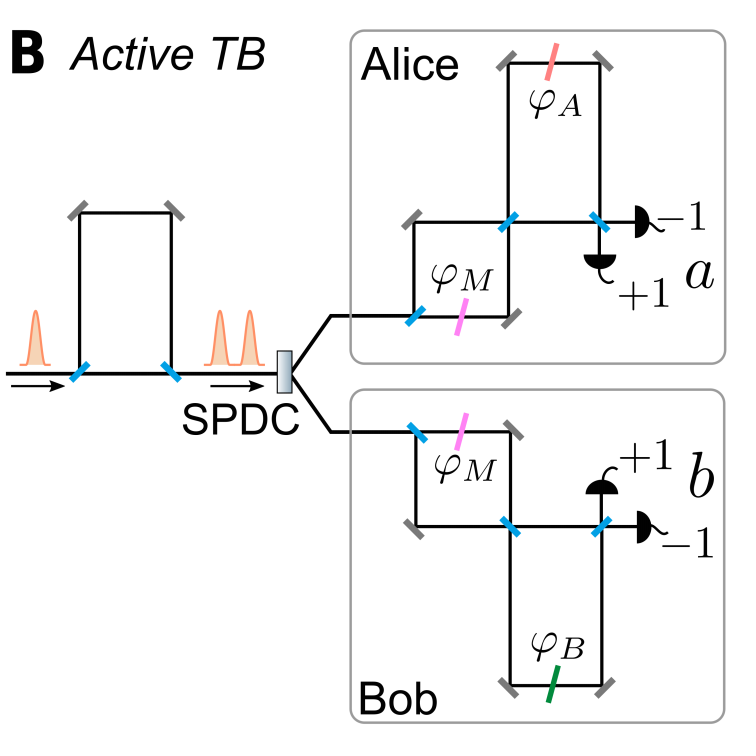
Entanglement is an invaluable resource for fundamental tests of physics and the implementation of quantum information protocols such as device-independent secure communications. In particular, time-bin entanglement is widely exploited to reach these purposes both in free-space and optical fiber propagation, due to the robustness and simplicity of its implementation. However, all existing realizations of time-bin entanglement suffer from an intrinsic post-selection loophole, which undermines their usefulness. Here, we report the first experimental violation of Bell’s inequality with “genuine” time-bin entanglement, free of the post-selection loophole. We modify the setup by replacing the first passive beam-splitter in each measurement station with an additional interferometer acting as a fast optical switch synchronized with the source. Using this setup we obtain a post-selection-loophole-free Bell violation of more than nine standard deviations. Since our scheme is fully implementable using standard fiber-based components and is compatible with modern integrated photonics, our results pave the way for the distribution of genuine time-bin entanglement over long distances.