Selection of papers
You can access the full list of publications here
-
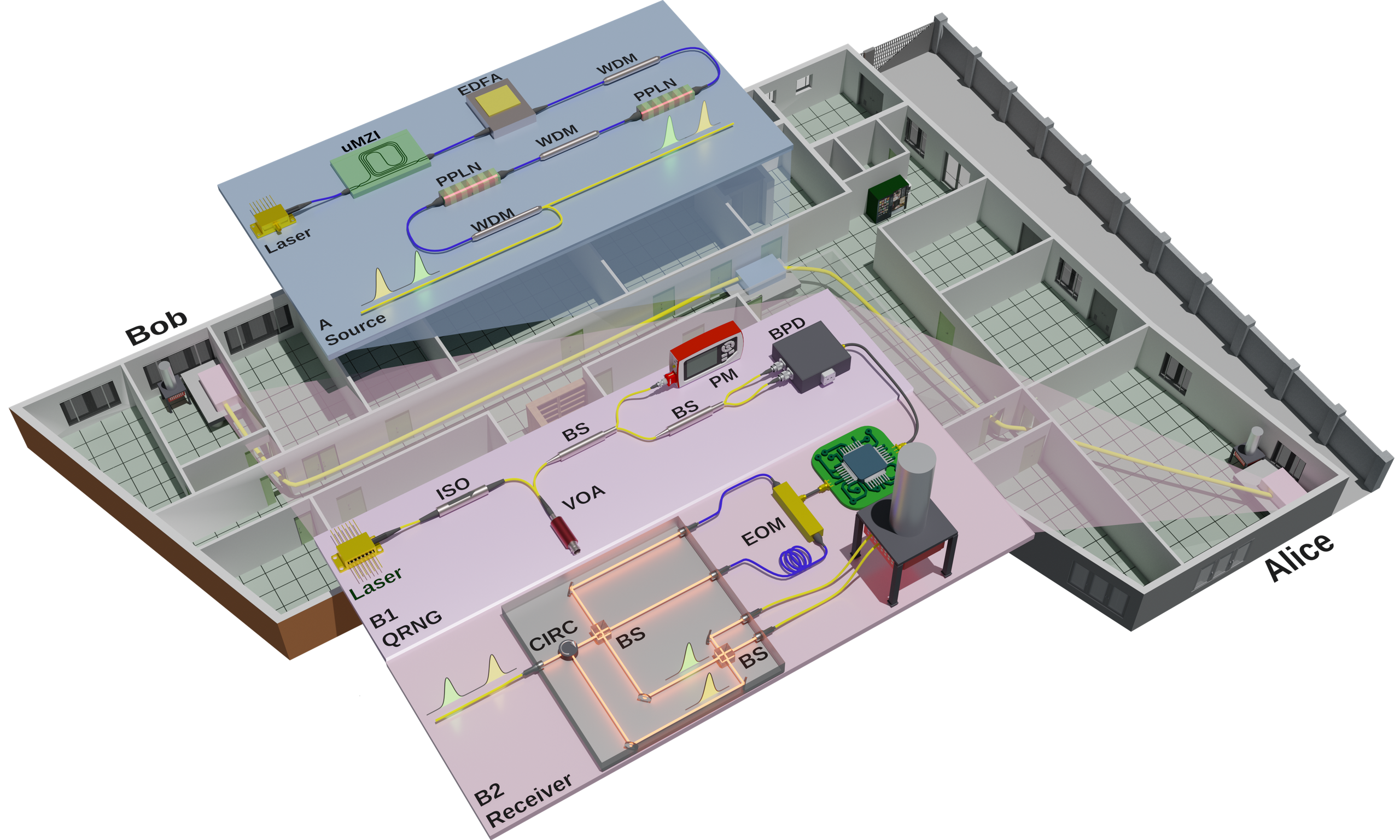
Postselection-loophole-free Bell test under strict spacetime constraints
Entanglement gives rise to correlations between distant quantum systems that cannot be explained by local realistic theories. Bell inequality violations provide a direct way to reveal these correlations and certify nonlocality, especially when the relevant experimental loopholes are closed. Time-bin encoding, in which quantum information is encoded into well-defined temporal modes, is a commonly used…
-
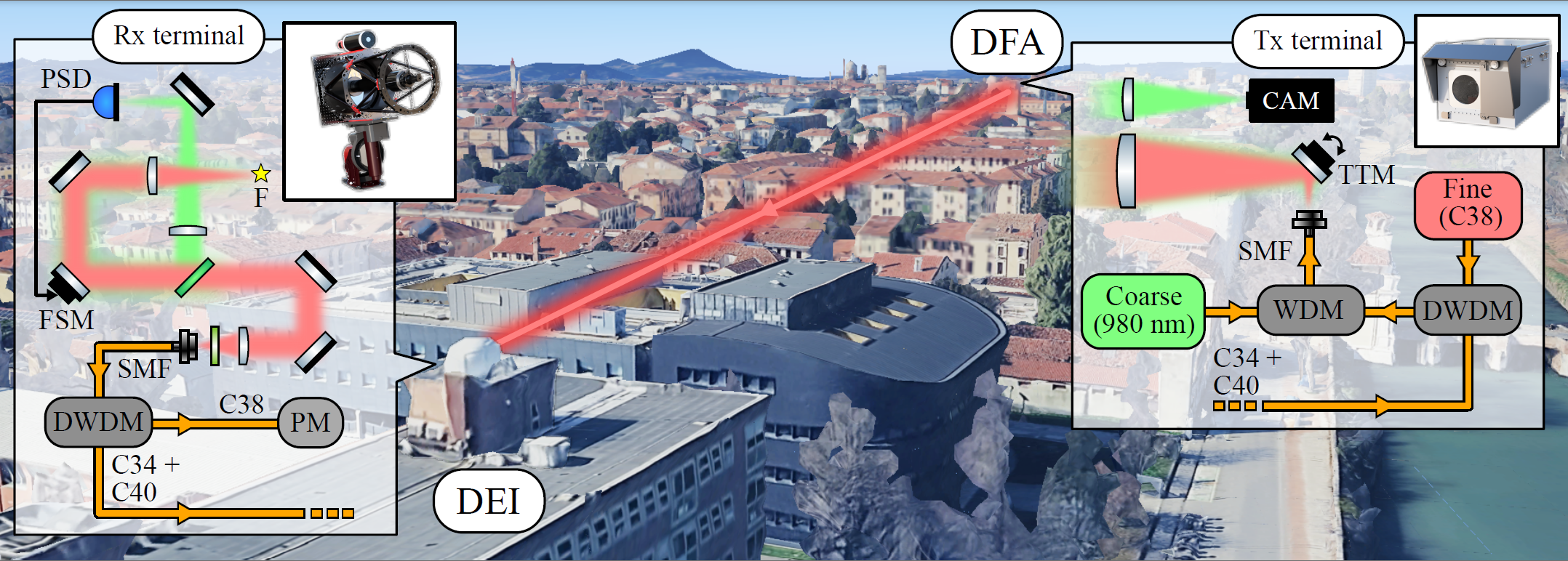
Multiplexing of CV and DV QKD Systems over Fibered and Free-Space Channels and Squeezed- and coherent-state quantum key distribution over a deployed hybrid fibre-free-space channel
Future quantum communication infrastructures will need to serve heterogeneous users on shared physical channels: short-range, high-throughput links favor Continuous-Variable Quantum Key Distribution (CV-QKD), while long-reach, high-loss links remain the domain of Discrete-Variable QKD (DV-QKD). Wavelength-division multiplexing (WDM) of the two protocols on a common channel would address both regimes simultaneously, but their markedly different noise…
-

Quantum bounds and device-independent security with rank-one qubit measurements
Device-independent (DI) quantum protocols use Bell inequality violations to ensure security or certify quantum properties without assumptions on the devices’ internal workings. In this work, we study the role of rank-one qubit positive operator-valued measures (POVMs) in DI scenarios. This class includes all qubit extremal POVMs, i.e., those measurements that cannot be realized as mixtures…
-

High-performance heterodyne receiver for quantum information processing in a laser-written integrated photonic platform
Continuous variable quantum key distribution (CV-QKD) and continuous variable quantum random number generation (CV-QRNG) are critical technologies for secure coContinuous variable quantum key distribution (CV-QKD) and continuous variable quantum random number generation (CV-QRNG) are critical technologies for secure communication and high-speed randomness generation, exploiting shot-noise-limited coherent detection for their operation. Integrated photonic solutions are key…
-

High-speed source-device-independent quantum random number generator on a chip
A wide range of applications require, by hypothesis, to have access to a high-speed, private, and genuine random source. Quantum random number generators (QRNGs) are currently the sole technology capable of producing true randomness. However, the bulkiness of current implementations significantly limits their adoption. In this work, we present a high-performance source-device-independent QRNG leveraging a…
-
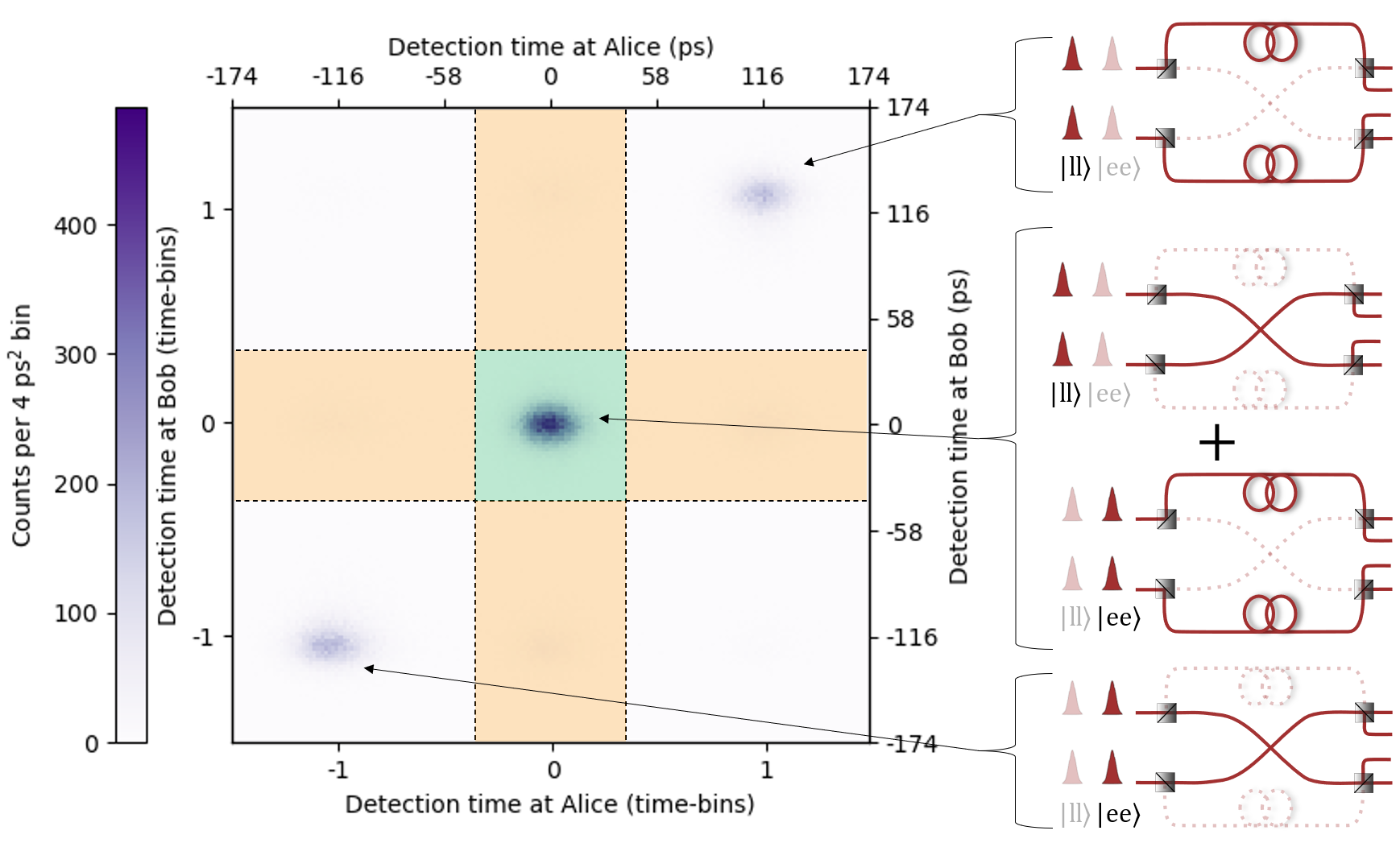
Experimental post-selection loophole-free time-bin and energy-time nonlocality with integrated photonics
Time-bin encoding has been widely used for implementing quantum key distribution (QKD) on optical fiber channels due to its robustness with respect to drifts introduced by the optical fiber. However, due to the use of interferometric structures, achieving stable and low intrinsic Quantum Bit Error rate (QBER) in time-bin systems can be challenging. A key…
-
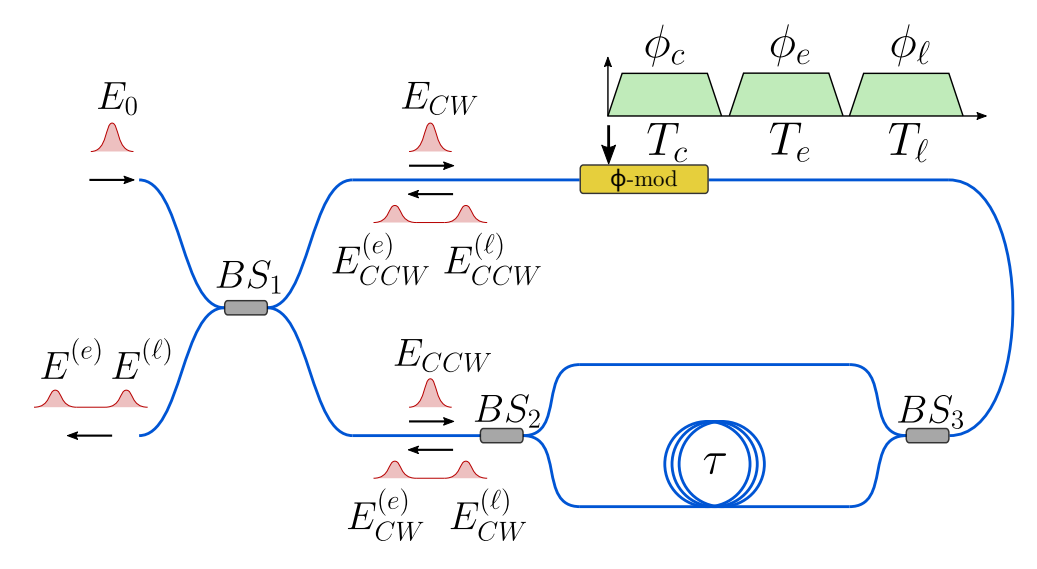
Low-error encoder for time-bin and decoy states for quantum key distribution
Time-bin encoding has been widely used for implementing quantum key distribution (QKD) on optical fiber channels due to its robustness with respect to drifts introduced by the optical fiber. However, due to the use of interferometric structures, achieving stable and low intrinsic Quantum Bit Error rate (QBER) in time-bin systems can be challenging. A key…
-
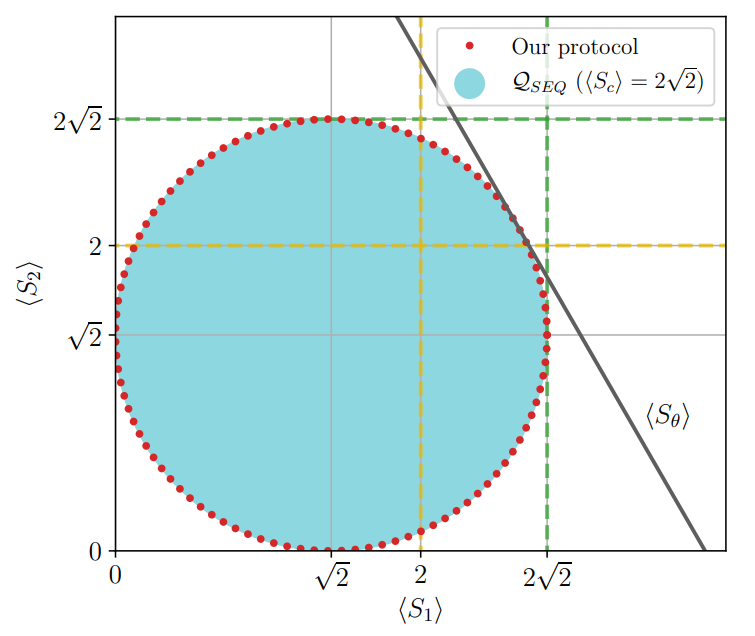
Geometry of sequential quantum correlations and robust randomness certification
Quantum correlations between the measurements of two or more separated observers play a fundamental role in many applications, such as randomness generation or key distribution. Recently, it was realized that sequential measurements (i.e., defined with a precise temporal ordering between subsequent measurements on a given system) can enhance the performance of these protocols. However, the…
-
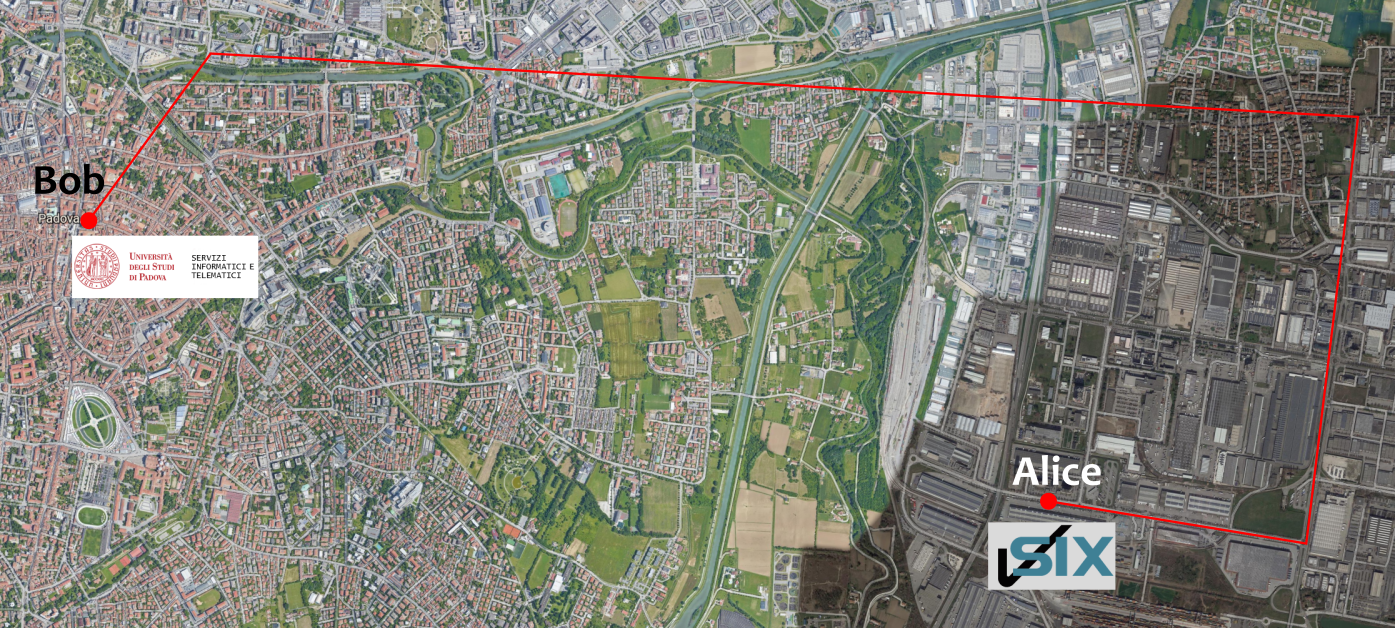
Deployment-ready quantum key distribution over a classical network infrastructure in Padua
Current technological progress is driving Quantum Key Distribution towards a commercial and world widescale expansion. Its capability to deliver unconditionally secure communication will be a fundamental feature in the next generations of telecommunication networks. Nevertheless, demonstrations of QKD implementation in a real operating scenario and their coexistence with the classical telecom infrastructure are of fundamental…
-
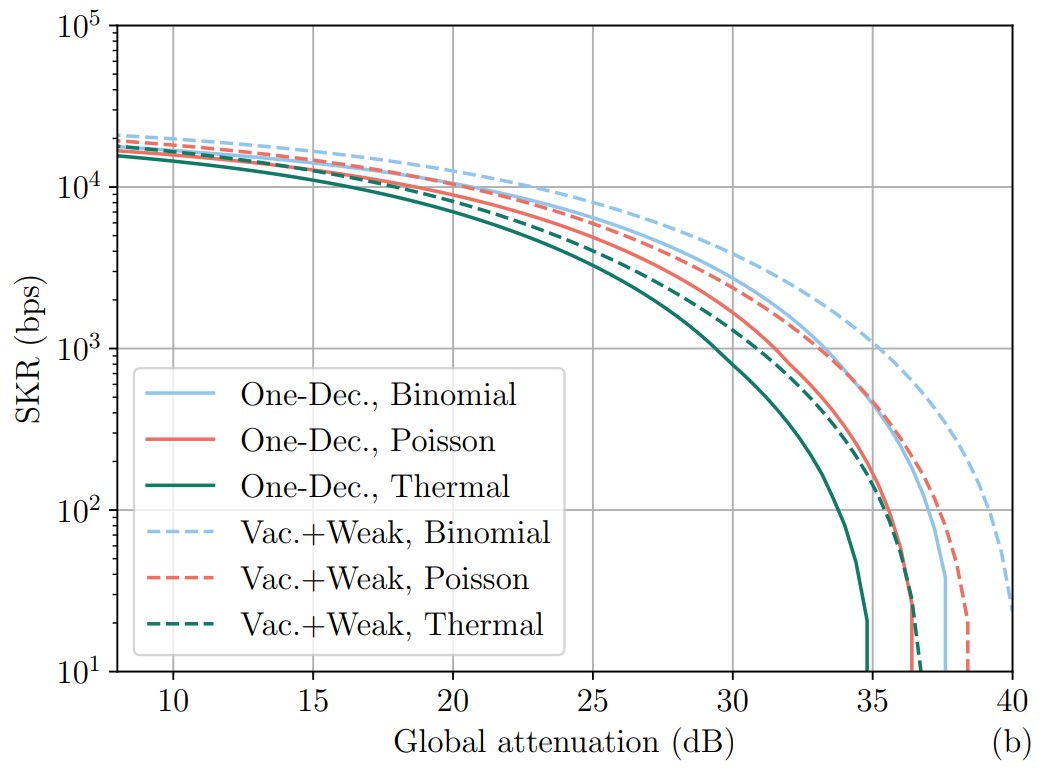
Security bounds for decoy-state QKD with arbitrary photon-number statistics
The decoy-state method is a standard enhancement to quantum key distribution (QKD) protocols that has enabled countless QKD experiments with inexpensive light sources. However, new technological advancements might require further theoretical study of this technique. In particular, the decoy-state method is typically described under the assumption of a Poisson statistical distribution for the number of…