Selection of papers
You can access the full list of publications here
-
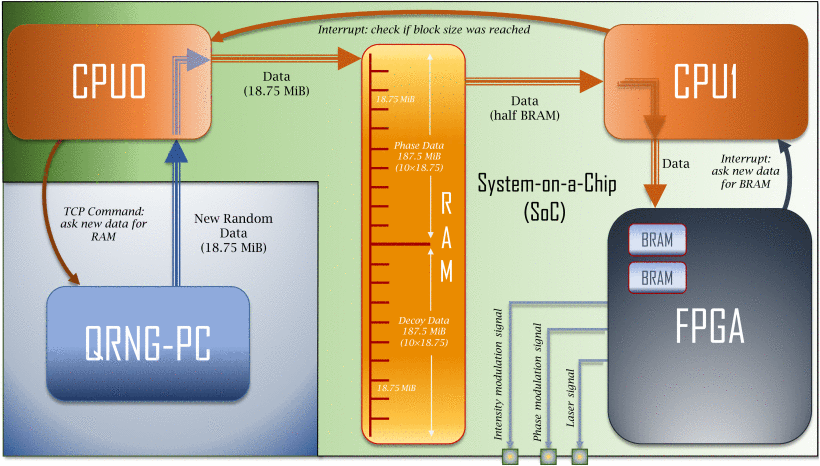
Versatile and Concurrent FPGA-Based Architecture for Practical Quantum Communication Systems
This article presents a hardware and software architecture, which can be used in those systems that implement practical quantum key distribution (QKD) and quantum random-number generation (QRNG) schemes. This architecture fully exploits the capability of a System on a Chip (SoC), which comprehends both a field-programmable gate array (FPGA) and a dual-core CPU unit. By…
-
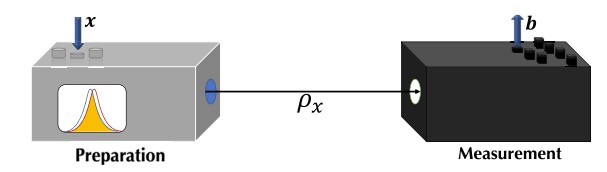
Practical Semi-Device Independent Randomness Generation Based on Quantum State’s Indistinguishability
Semi-device independent (Semi-DI) quantum random number generators (QRNG) gained attention for security applications, offering an excellent trade-off between security and generation rate. This paper presents a proof-of-principle time-bin encoding semi-DI QRNG experiments based on a prepare-and-measure scheme. The protocol requires two simple assumptions and a measurable condition: an upper-bound on the prepared pulses’ energy. We…
-
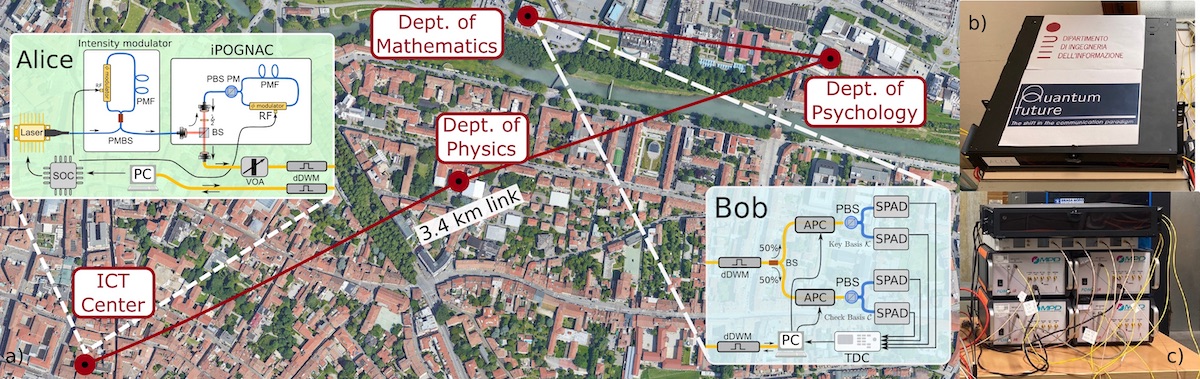
Resource-effective Quantum Key Distribution: a field-trial in Padua city center
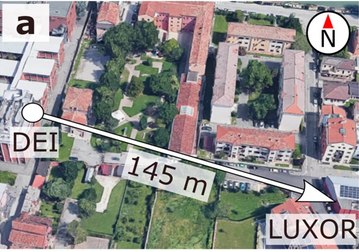
Field-trials are of key importance for novel technologies seeking commercialization and wide-spread adoption. This is certainly also the case for Quantum Key Distribution (QKD), which allows distant parties to distill a secret key with unconditional security. Typically, QKD demonstrations over urban infrastructures require complex stabilization and synchronization systems to maintain a low Quantum Bit Error…
-
Full daylight quantum-key-distribution at 1550 nm enabled by integrated silicon photonics
The future envisaged global-scale quantum communication network will comprise various nodes interconnected via optical fibers or free-space channels, depending on the link distance. The free-space segment of such a network should guarantee certain key requirements, such as daytime operation and the compatibility with the complementary telecom-based fiber infrastructure. In addition, space-to-ground links will require the…
-
Simple Quantum Key Distribution with qubit-based synchronization and a self-compensating polarization encoder
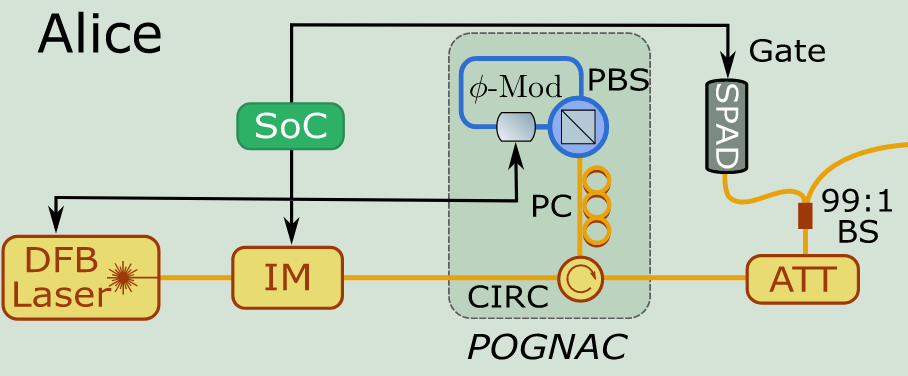
Quantum Key Distribution (QKD) relies on quantum communication to allow distant parties to share a secure cryptographic key. Widespread adoption of QKD in current telecommunication networks will require the development of simple, low cost and stable systems. However, current QKD implementations usually include additional hardware that perform auxiliary tasks such as temporal synchronization and polarization…
-
Stable, low-error and calibration-free polarization encoder for free-space quantum communication
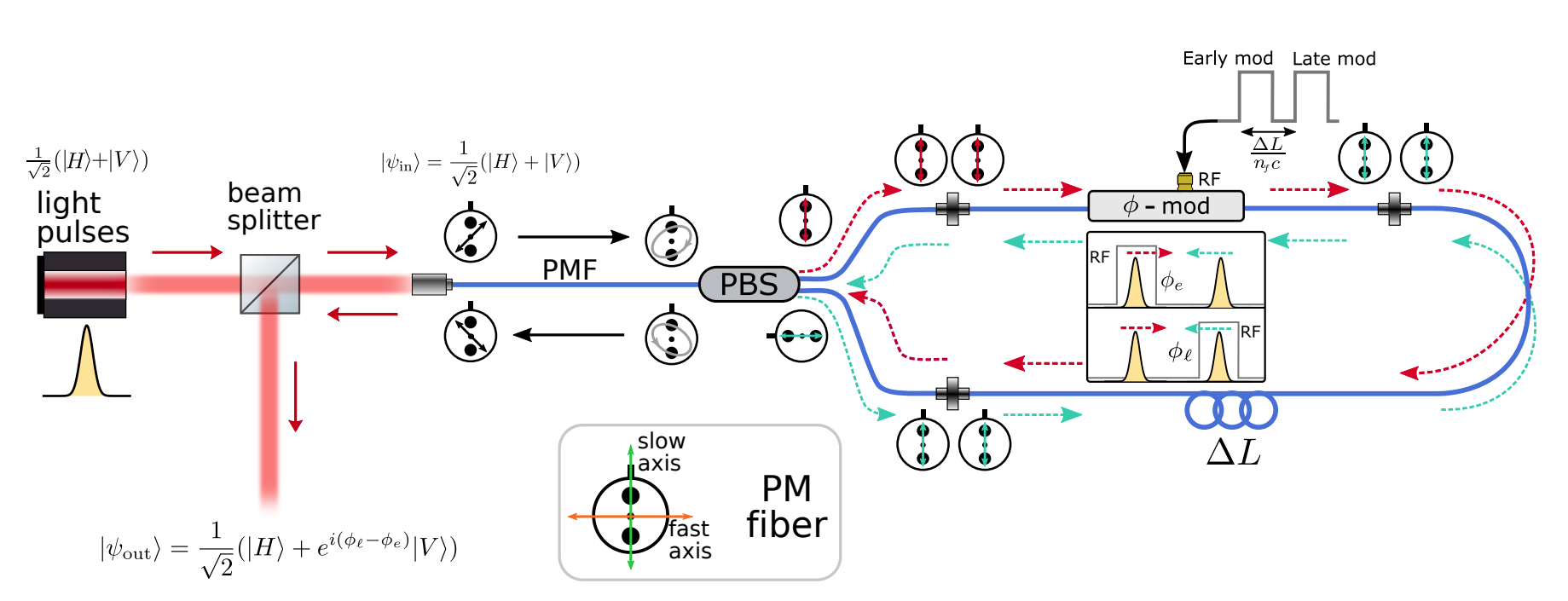
Polarization-encoded free-space Quantum Communication requires a quantum state source featuring fast polarization modulation, long-term stability and a low intrinsic error rate. Here we present a source based on a Sagnac interferometer and composed of polarization maintaining fibers, a fiber polarization beam splitter and an electro-optic phase modulator. The system generates predetermined polarization states with a…
-
New All-fiber autocompensating source for polarization QKD
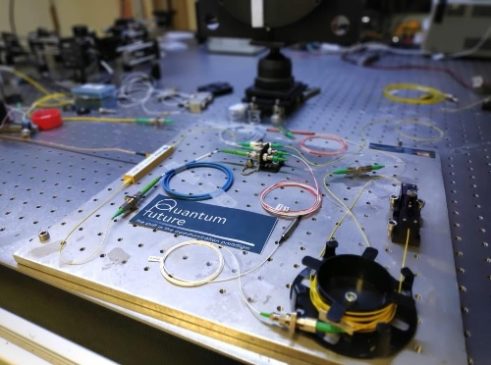
Quantum key distribution (QKD) allows distant parties to exchange cryptographic keys with unconditional security by encoding information on the degrees of freedom of photons. Polarization encoding has been extensively used for QKD along free-space, optical fiber, and satellite links. However, the polarization encoders used in such implementations are unstable, expensive, and complex and can even…
-
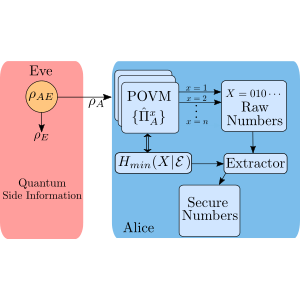
Source-device-independent heterodyne-based quantum random number generator at 17 Gbps
Random numbers are commonly used in many different fields, ranging from simulations in fundamental science to security applications. In some critical cases, as Bell’s tests and cryptography, the random numbers are required to be both secure (i.e. known only by the legitimate user) and to be provided at an ultra-fast rate (i.e. larger than Gbit/s).…
-
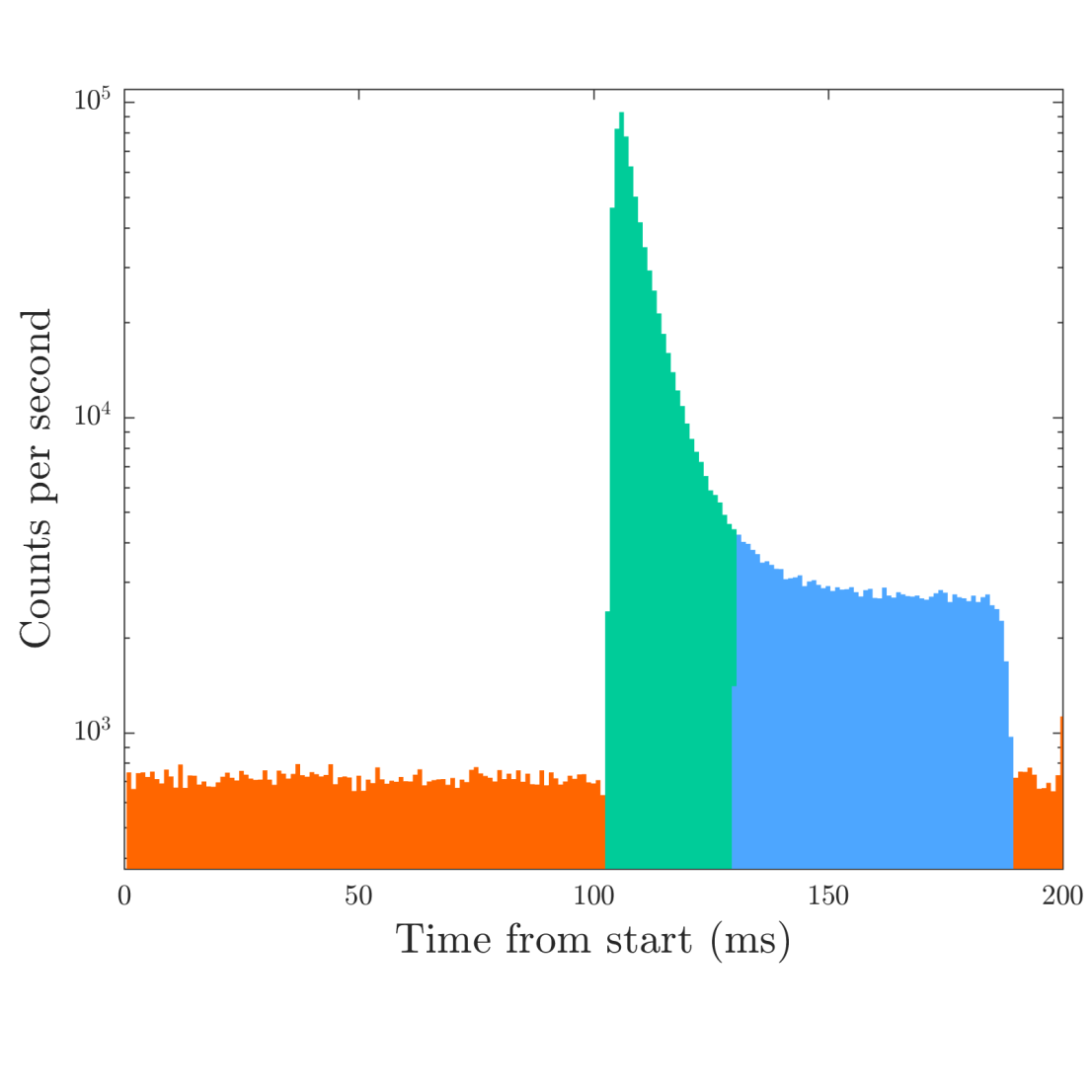
Towards Quantum Communication from Global Navigation Satellite System
Satellite-based quantum communication is an invaluable resource for the realization of a quantum network at the global scale. In this regard, the use of satellites well beyond the low Earth orbits gives the advantage of long communication time with a ground station. However, high-orbit satellites pose a great technological challenge due to the high diffraction…
-
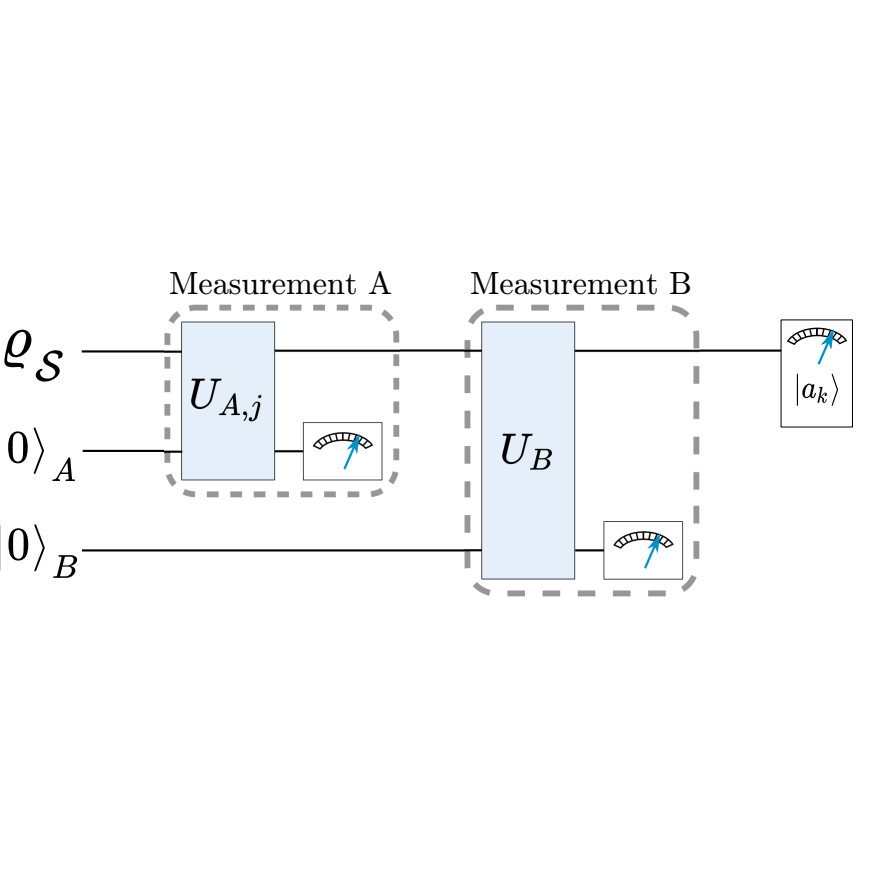
Direct reconstruction of the quantum density matrix by strong measurements
New techniques based on weak measurements have recently been introduced to the field of quantum state reconstruction. Some of them allow to directly measure each matrix element of an unknown density operator and need only d+1 different couplings between the system and the measuring device, compared to d2 in the case of standard QST for…